4/15 We’ve found a correlation
This session was inspired by a twitter conversation I saw a few weeks back over a problem set @bowenkerins presented at a conference from PCMI.
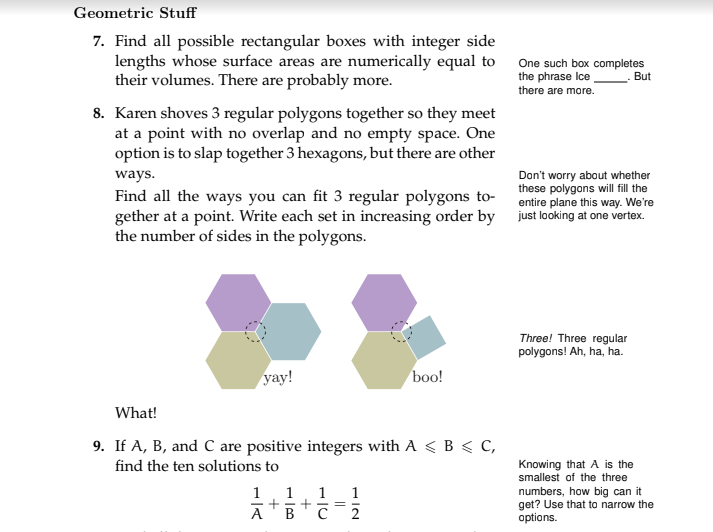
I really enjoyed working through this myself and I thought it would adapt really well to the problem carnival format because of the interconnections. (See: 522-cycles-and-circles for another example)
So after debriefing the kids on how a Quiz bowl went over the weekend I dived right in. I wrote all 3 problems on the board (slightly modified - I tend to strip them down a bit) We then talked through the definitions to make sure everyone understood things like surface area and regular polygons. I do this through a series of questions and answers from the kids after reading writing each one down i.e. “so let’s check if we are all on the same page: can someone give me a definition of a X?” I did not in anyway indicate these were related but instead emphasized the different domains they belonged to.
Note: in previous years with more big wall whiteboards I would have done this at the boards but given the constraints of the rooms we used the small whiteboards at the tables instead
Then I let the kids self group and attack the problems in any order they wished. Interestingly most groups gravitated to the last most algebraic appearing one.
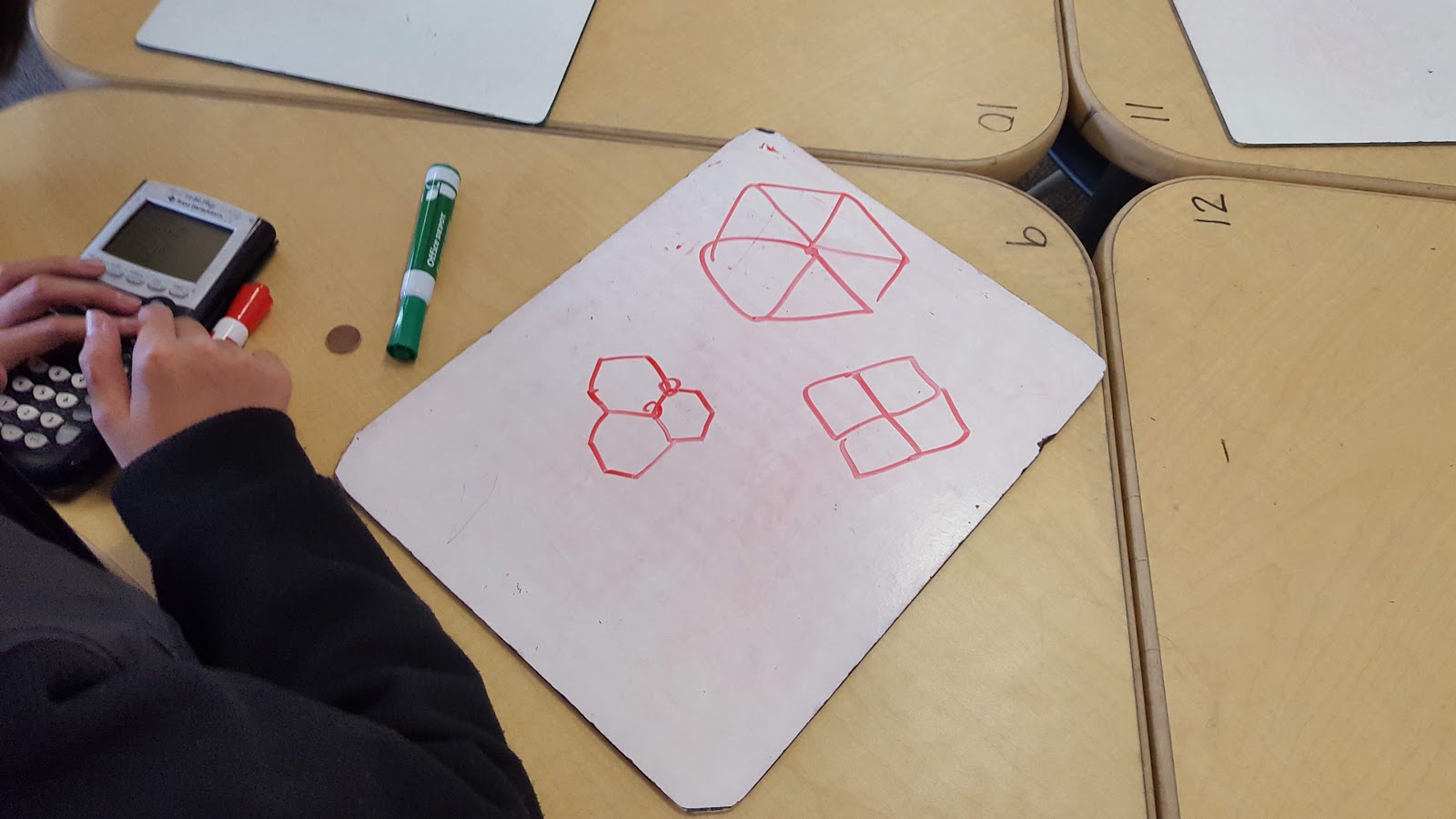
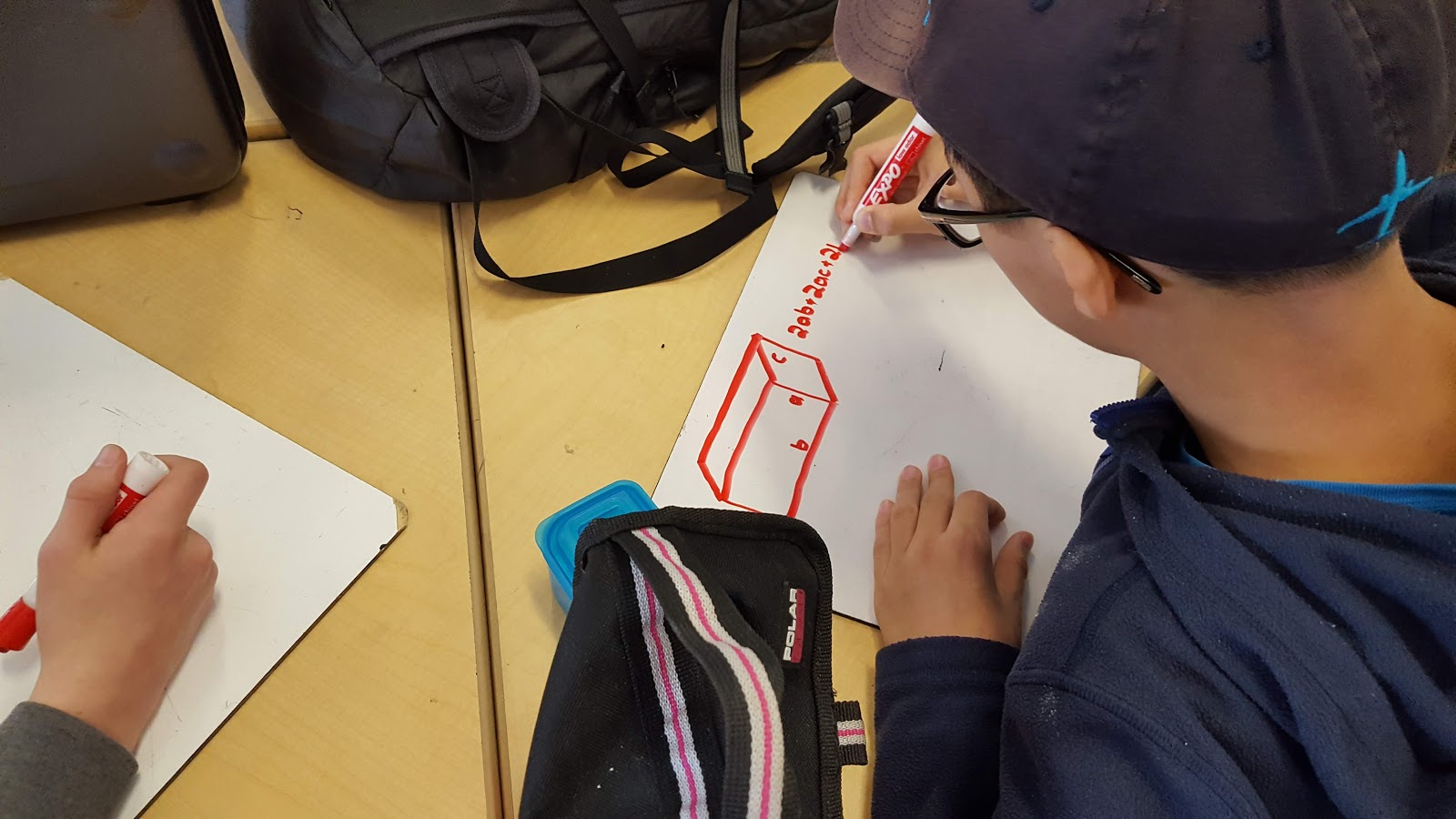
As normal I spent my time walking between groups and having small conversations. My hope was to keep everyone working at least a half hour and have the different groups all make progress across the total set of problems so we could come together make the connections in a group discussion but I wasn’t sure how far everyone would get or if they would notice the underlying structure before the end.
In practice what I spent the most time discussing was:
- Ideas on how to play with the problems. I.e. why don’t just try some numbers and try to find some strategies. What have you tried already? etc.
- A bit of geometry work on how to determine the number of degrees in a regular polygon interior angle. I ended up working through this process several times i..e starting from a triangle with 180 degrees and dividing the other polygons up into triangles. So if repeated I might do this as an initial group review instead.
- A little bit of help here and there on the instructions and some math techniques as well as keeping stragglers on task.
This phase went pretty well. The problems have fairly low entry requirements so it was able to appeal to the whole room despite the very different places everyone is within the curriculum.
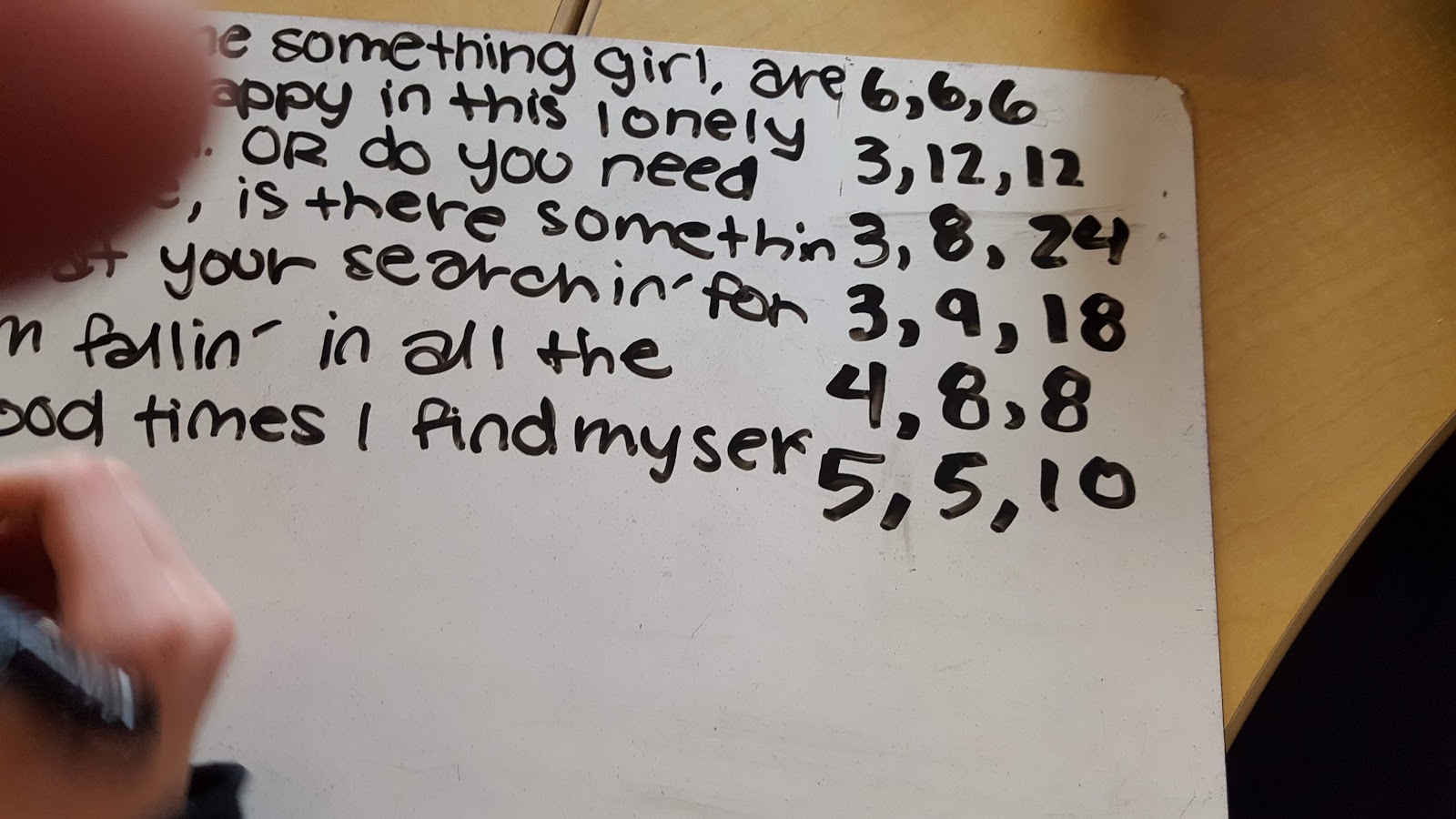
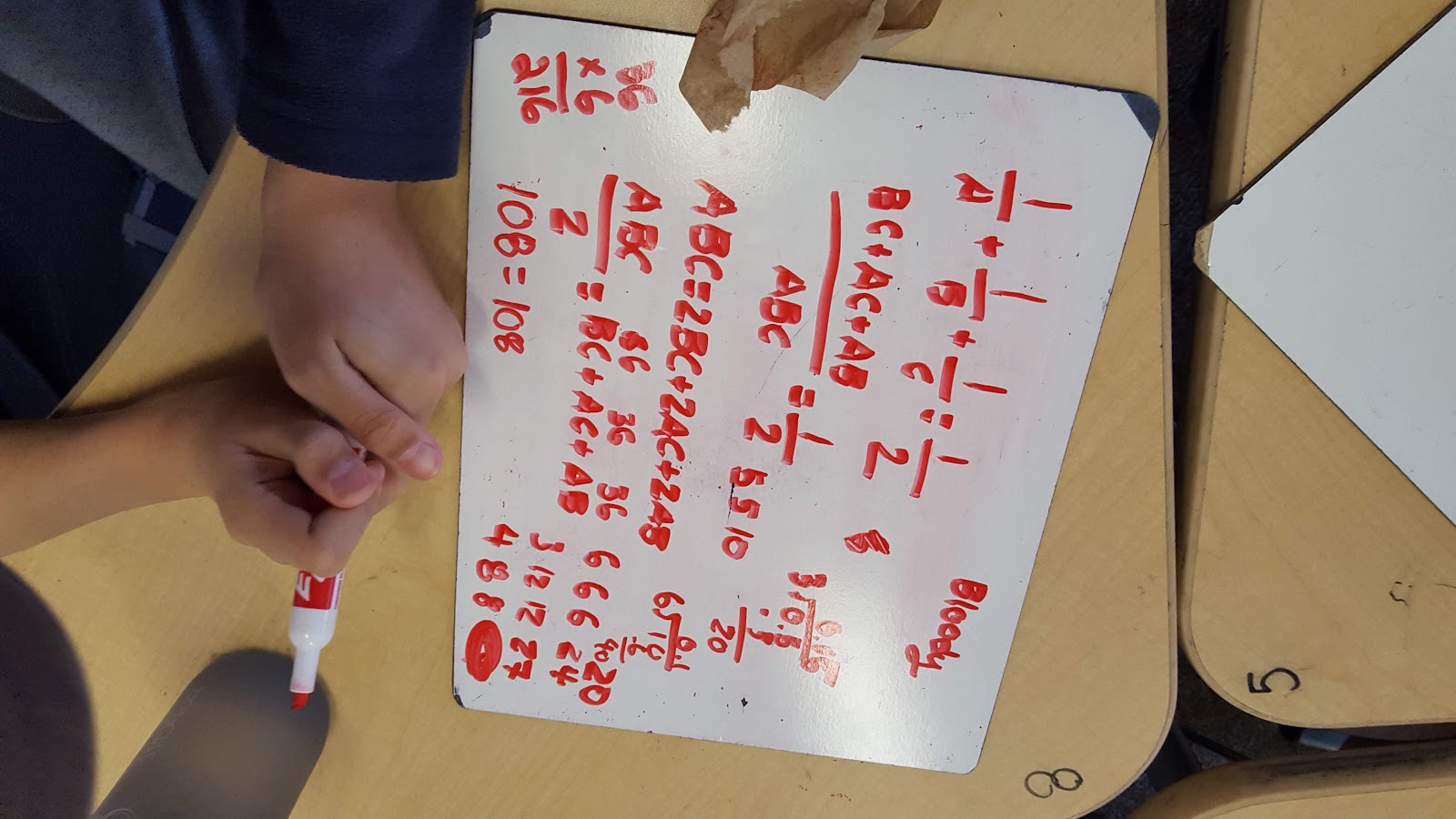
What was very exciting was that 20 minutes in one group became very animated. “We’ve found a correlation!” All of their solutions worked in any of the problems. I then asked them to see if they could figure out why it was occurring and they very quickly worked there way between the Algebraic forms of #1 and #3. It took a bit longer to bring #2 into the fold. But overall I was super pleased. (Interestingly this group started with the 2nd problem rather than the 3rd) I also asked them to determine if there was a limited number of solutions and why?
Finally I reserved the last 15 minutes for presentations and debriefing. Because I had a good handle on what each group did I ordered them a bit in terms of who presented. (The need to preserve the narrative arc was more key to me today) I then basically had everyone talk about what they discovered. My key questions beyond what numbers did you find was to ask followups on the strategies they had used during the process. We also probed what patterns were occurring in the solutions and if there seemed to be an upper limit. There were some good observations on the relative primeness of the numbers. One other group discovered 6,6,6 was a global solution. We closed out with the final group showing their algebra:
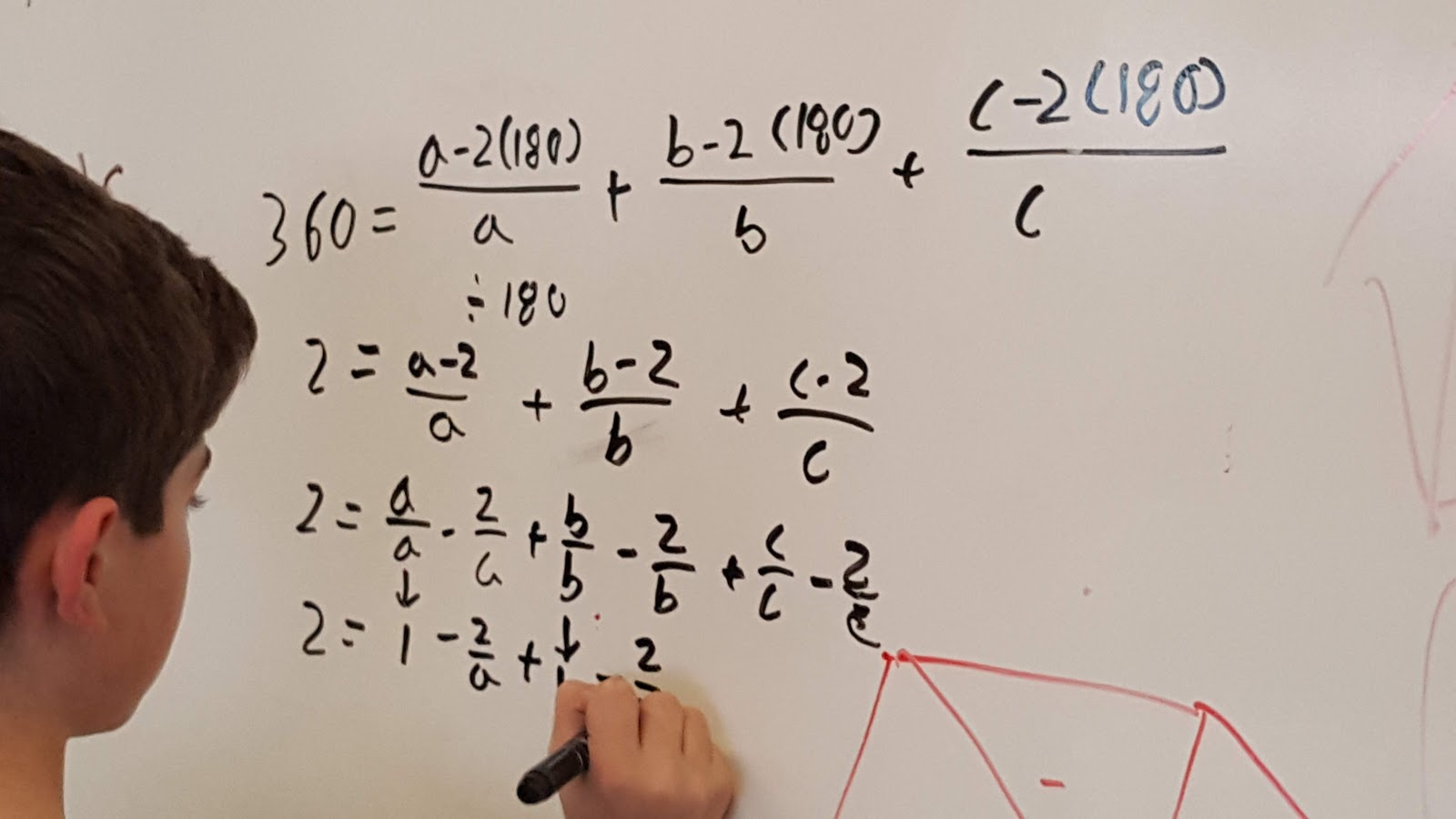
Overall the whole process went well and took most of the hour as expected. The one subtopic I did not go into was some factoring techniques to deal with the Egyptian Fractions. That would be a good extension but the kids didn’t go down those paths.
POTW:
Some sample purple comet problems. I intend to do a soft non-formal version of the contest at some point in the next few weeks. Because it won’t be for real I’m toying with how to change the structure to maximize participation.
Leave a comment