11/4 YAPSMAD (Yet Another Platonic Solid Math Art Day)
Continuing the focus from last week, I decided to concentrate on getting everyone to ask more questions today in the Math Club. To that end, I started with a WODB (Which one doesn’t Belong) prompt.
I’ve never used these before despite reading about them for years. The idea is that you throw the images up on the board and as a group find as many as possible different reasons for why any one of the shapes doesn’t belong in the set.
After explaining the rules and stressing that there was no correct answer we gave this one a shot. And overall, it was a grand success. I had scores of ideas from the group and much improved participation from the kids especially the younger 6th graders whom I want to encourage to speak more. I will definitely use these again over the next few weeks at least as our warm up. Favorite moment: a discussion about the difference between a line of symmetry and a line of reflection.
We then went to the POTW (from UWaterloo):
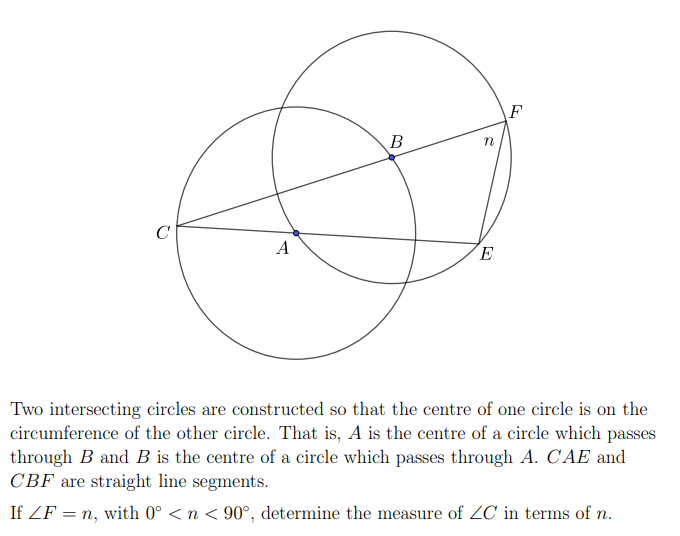
The warm up really seemed to help here. Again I asked everyone to first volunteer things they noticed about the problem like last week. This time, though I felt like I got a stronger buy in and more responses back. The kids basically had found almost everything interesting after a few minutes and I was ready to have them solve the whole problem. Here things bogged down a bit and I decided to clarify the student work already on the board so we could move on. (I’m still deciding whether this was a good idea or not but I needed the time back)
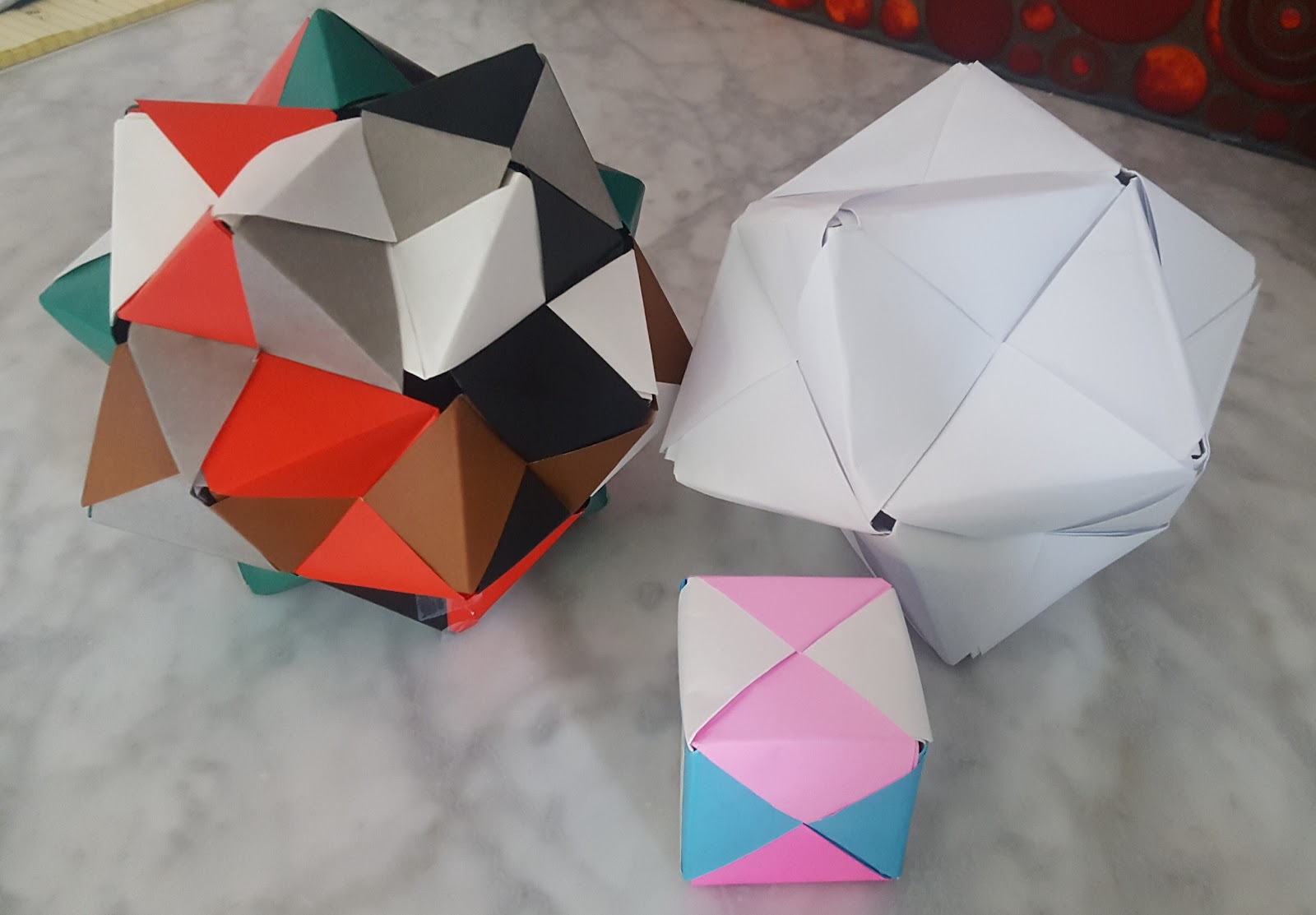
Finally it was time for our main task: the assembly of 3D platonic solids out of modular unit origami.
I’ve been planning to do this for a while but it took until this last weekend for me to have enough time to practice the folding. This is not my first time doing something similar. See: http://blog.mathoffthegrid.com/search?q=platonic+solids. I’d rate this version as about average in complexity and dexterity needed versus some of the other days. (With the stiff full sized 8x11 paper I used when practicing, its actually fairly easy. The origami paper is a bit more fickle.)
I ended up using the following sites a lot for instruction:
Some additional advice I learned:
- Practice with colored paper at least once. It adds another element to manage.
- Stress being careful about folding and to make the creases sharp.
- Also point out this is a group activity with limited paper and to not tear, create airplanes with it etc. or you’ll let down your partners.
- Use over-sized paper for modelling the folds in front of everyone. It may make sense to run marker over the edges so they stand out more.
- Focus on getting the direction of the last folds correct. (Flaps on the opposite side from the pockets and then folding the pocket side diagonally in half so that the fold goes outward. (Use the illustrations from above to make more sense of this)
- Practice the layout of the pyramids especially flattened out.
- Keeping the initial pyramids together is tricky. A little tape on the edges may be needed.
- The number of different colors to use is based on how many corners meet at a vertex (N) and needs one more to work (This is a great group question to think about) so the cube has 2 sets of 3 , the octohedron has 3 sets of 4 and the icosohedron has 5 sets of 6.
I actually messed up the last constraint and gave the kids 3 sets of 2 colors for our first cube. This led to a lot of questions about why they couldn’t get a perfect color pattern. I handled this decently but I could have leveraged it more and have asked them to think about what was happening and if there was anything that would make it work.
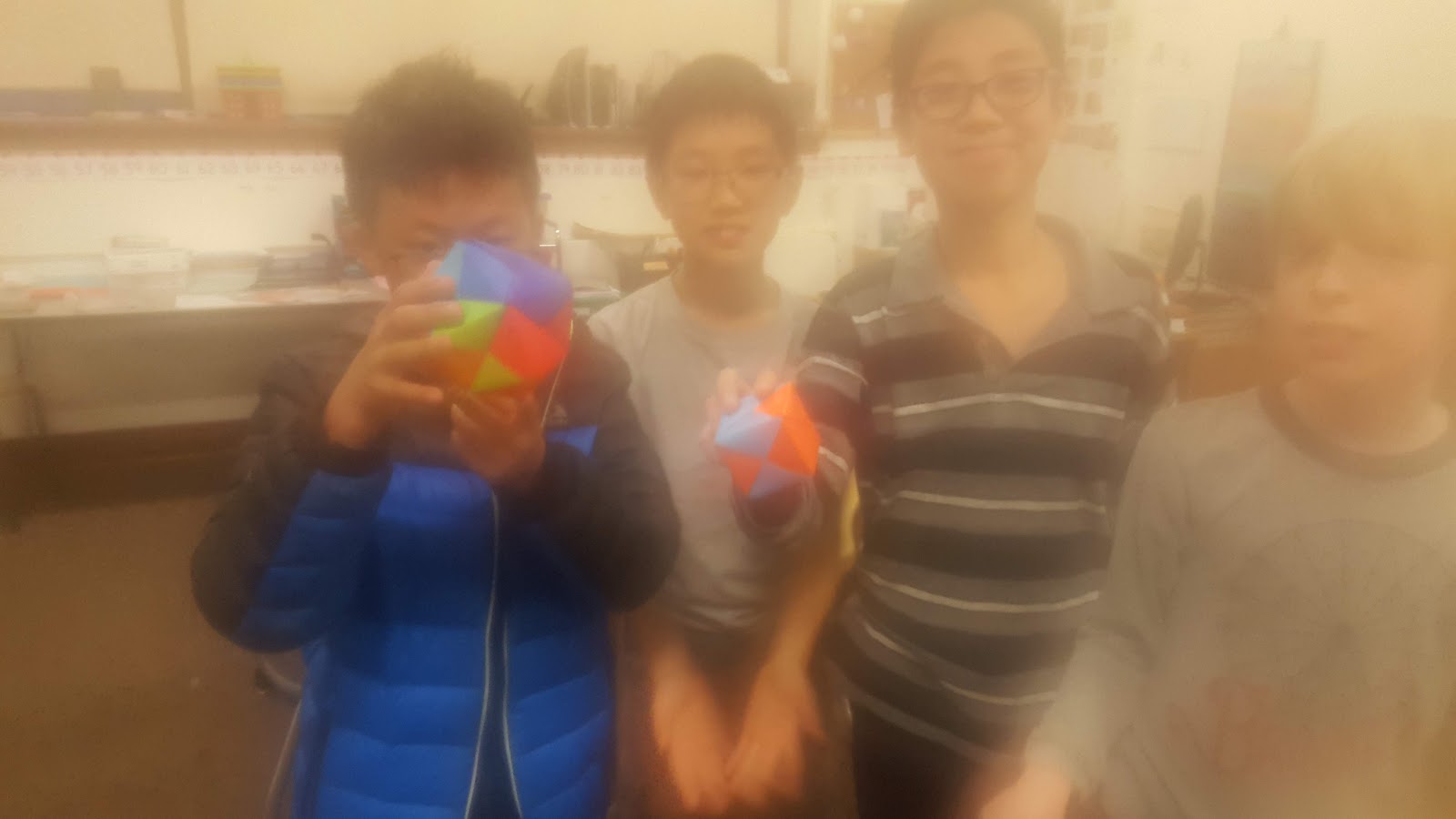
Generally, everyone completed a cube but we only had enough time for one group to fully finish the octohedron. Also the overall room was a bit more chaotic than expected during the process and I ended up focusing on keeping a few groups on track. Next week is AMC8 which I’m sure will go smoothly but the following week, I think I’m going to remind the group about expectations during free form times.
Leave a comment