Carnival of Mathematics 193
Welcome
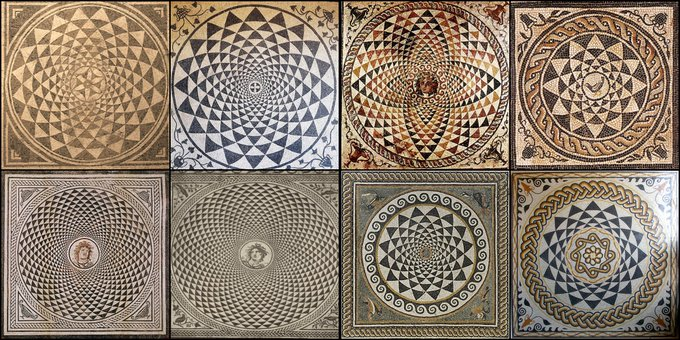
(Ancient Roman mosaic floor patterns - @HistoryJourney)
Welcome to the 193rd Carnival and my fourth! time hosting. For all the other carnivals future and past, visit The Aperiodical where you can also submit future posts. It’s been a wild ride since Carnival 181, spent mostly in the confines of my home office. Thankfully, I’ve been lucky enough to avoid the worst suffering of the pandemic. Life goes on so as the initial shock passed I’ve learned a great deal about doing remote math with students, epidemiology, the nature of resilience, and the comparative advantages of Zoom vs WebEx vs Google Meetings.
Facts about 193
Before going farther, as is traditional, here are a few arcana about the number 193 courtesy of the Wikipedia:
-
193 is an odd number
-
193 is a centered 32-gonal number
-
193 is a happy number
-
193 is a lucky number
-
193 is an odious number
-
193 is a square-free number
-
193 is the sum of 2 square numbers: 122 + 72 (or 144 + 49)
-
193 is the difference of 2 square numbers: 972 - 962 (or 9409 - 9216)
-
193 is a prime number
-
193 is a Cuban prime
-
193 is a full reptend prime
-
193 is a Pierpont prime[1]
-
193 is a Pillai prime[2]
-
193 is a Proth prime, as it is 3 × 26 + 1
-
193 is a twin prime with 191
-
193 can be written as the difference between the product and the sum of the first four primes
-
193 is a twin number
-
193/71 is the most accurate approximation of Euler’s Number (e) such that both the numerator and the denominator are integers less than 200 (approx. 99.99897% accurate)
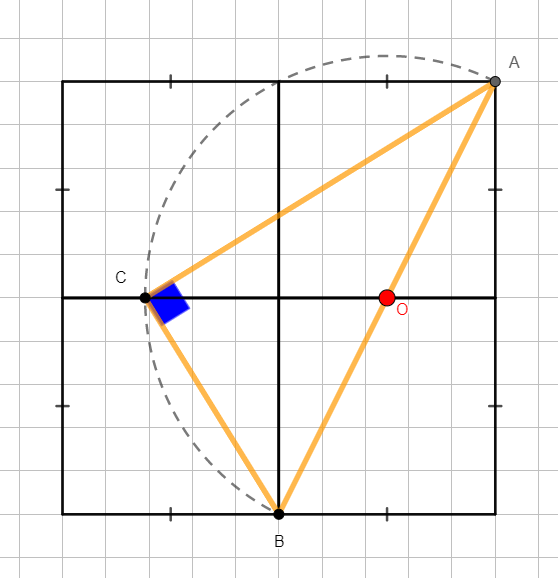
And while 193 doesn’t resonate particularly strongly with me, in honor of this being my fourth go about, here’s one my favorite geometric facts about squares: Can you spot the golden ratio embedded in this figure?
Submissions
First up for this month’s submissions is a blog post from physicist Sabine Hossenfelder: “Should Stephen Hawking have won the Nobel Prize?”. I’ve really enjoyed Hossenfelder’s books and videos in the past. She has a divergent but compelling view of the direction of the field that’s worth checking out. This piece is more of a tour of the highlights of Hawking’s career from a physics perspective than dive into the math involved But if like me you are more aware of Hawking as a celebrity versus his actual work it serves as a good overview.
Geometry Interlude
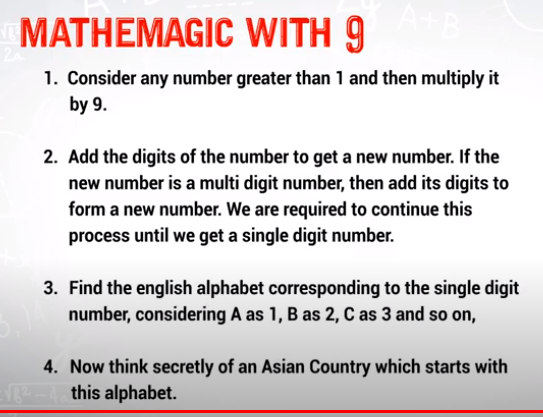
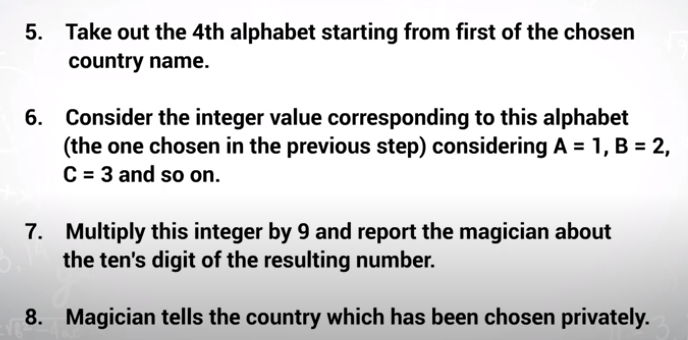
Next, there were a few submissions from GanitCharcha. Including this lovely video on a slew of number theory around the number 9
You should check out the entire video but I particularly liked this highlight at the end. Exercise for the reader. Try this out and puzzle out Why does this work?
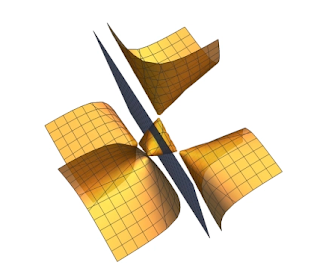
For something a little more advanced but visually quite engrossing Anna Seigal has a post up on “Three Correlations and an algebraic classification” https://picturethismaths.wordpress.com/2021/03/18/three-correlations-and-an-algebraic-classification/
This has a linear algebra connection which provides a somewhat natural transition to this fascinating tweet from Tamas Gorbe:
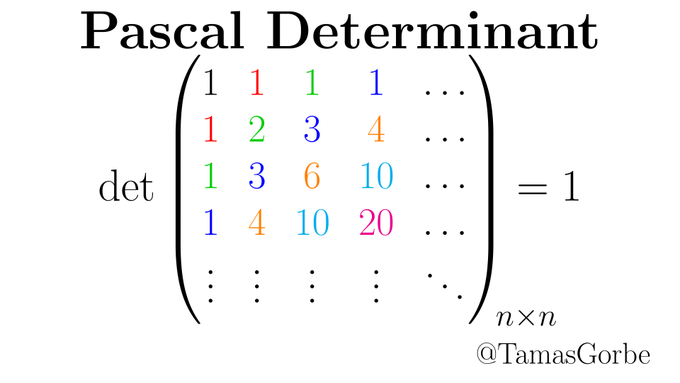
I took a stab at understanding why it works in my last post and after trying it out on several friends and I can attest to it being fun. Which brings me to a video series from Timothy Gowers on YouTube. He’s been working through problem like the one above in real time and its been fascinating to watch. I’ll highlight the latest one:
All told, both the problems and the working process are a fascinating watch. This one I’m still working on and holding out before watching the full video.
Prove: $ \text{If n, a, b, c, d are positive integers with} n^2 < a < b < c < d < (n+1)^2 \text{ then ad cannot equal bc.}$
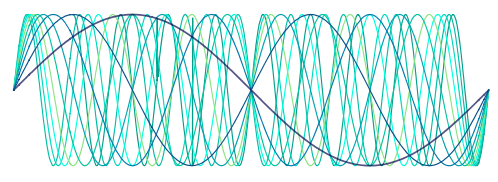
Sam Hartburn wrote a post this month at https://samhartburn.co.uk/sh/can-you-sing-two-notes-at-once/ which delves into the maths behind a vocal trick: singing overtones. There’s some compelling trigonometry/wave physics involved as well as some mind bending audio samples. That boundary between math and art continually fascinates me.
Also on the boundary between disciplines is this recent interview in the Guardian with author and roboticist, Catherine Menon musing about the similarities between the creative writing process and proof creation.
    "I find that the “feeling” of constructing a mathematical proof is
    identical to the feeling of constructing a sentence, paragraph or plot.
    This is largely down to the nature of pure maths as opposed to applied
    maths. Pure mathematics is very abstract: it’s a language of ideas
    rather than numbers. The value of a proof will often lie in how elegant
    or interesting it is, just like the value of writing. Obviously, proofs
    do have to be mathematically correct, but within those constraints
    there’s enormous scope for expressing ideas in different ways"
Hopefully you’re own creative process is inspired by Menon and you’re ready for Colin Beveridge’s recent blog posts on his site: https://flyingcoloursmaths.co.uk/a-pretty-puzzle/ highlighting a problem from Matt Enlow:

Full confession, I have a small part in the introduction, but the star here is both Matt’s problem and Colin’s process. This one is a ton of fun and I recommend a go at it first before reading Colin’s writeup.
Cellular automata are always fun. But I have to say Sophia Wood’s latest one on her blog https://fractalkitty.com/101-days-of-creative-coding-docc/day-91-of-101-docc/ is a stunner.
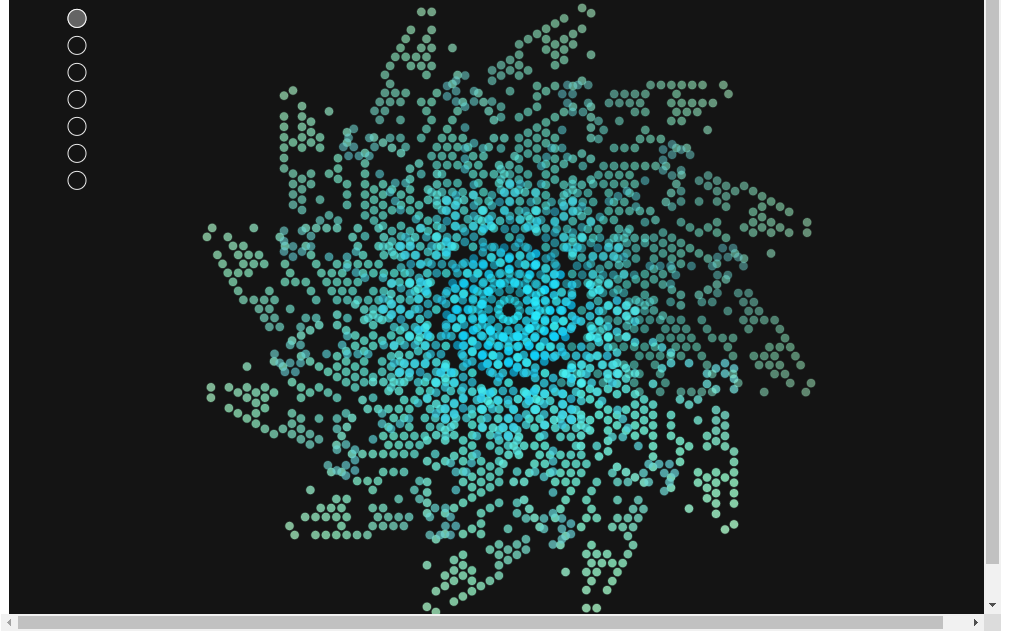 More please!
Next we have a cool video / math project from Jo Nakasima. a Magnetic Rubik’s cube. To quote the prolific Sam Harburn: “Ooh, Jo Nakashima, who designed the slinkies that I talked about at MathsJam a few years ago, has a tutorial for a working origami Rubik’s cube, held together by magnets.”
This may be a bit beyond my level of craftiness but its a reminder that I still have a bucket list item to learn how to solve a Rubik’s cube.
Meanwhile over on R J Lipton’s blog there is an overview of Lola Thompson’s recent work:https://rjlipton.wpcomstaging.com/2021/04/18/summing-up-the-primes/
There’s a lot to digest in this post but one of the most interesting parts is the discussion the Mobius and Merten’s functions
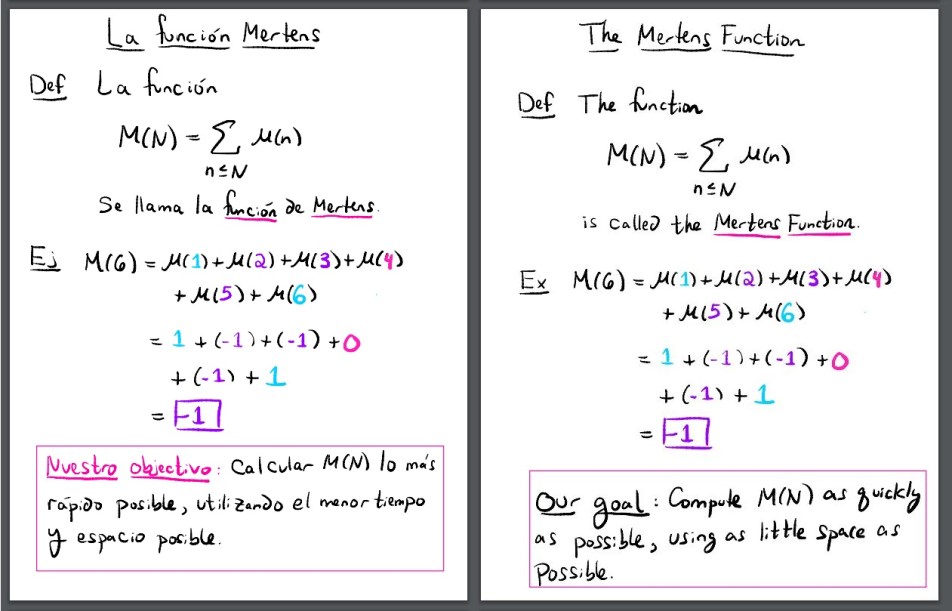
Continuing with one more formal post, Several folks on twitter including Tai-Danae Bradley were recently recommending Tom Leinsters Galois theory notes.
“I’m a big fan of Tom Leinster’s expository writings and just learned he’s written 100+ pages of notes on Galois Theory for undergrads—lovely! https://maths.ed.ac.uk/~tl/gt/gt.pdf“ This is one of those areas I never studied I never studied in school and I keep coming back to as a gap I want to explore. I’ve been having fun working through this extensive writeup.
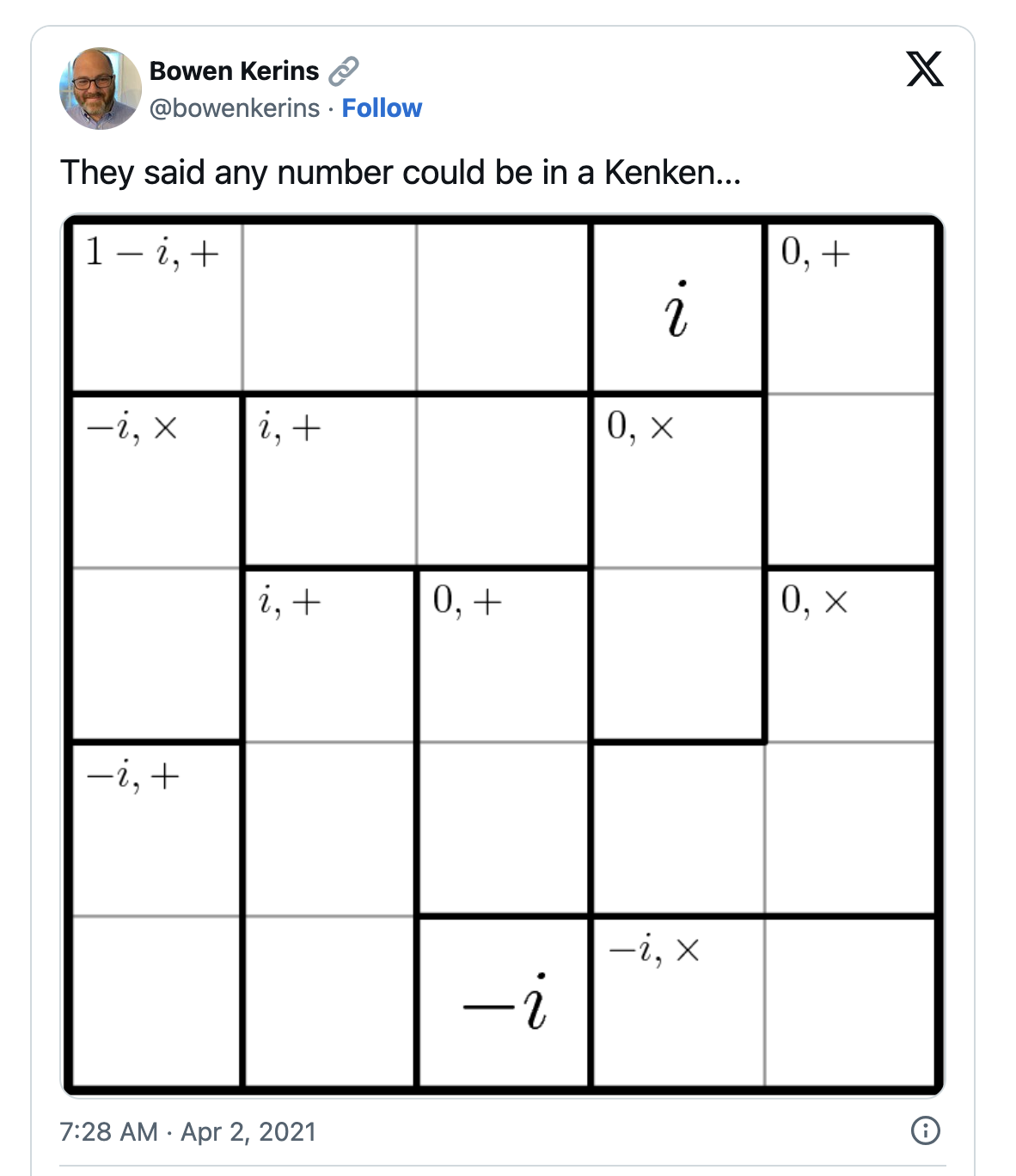
Let’s close things out with a very clever kenken variant
 x
They said any number could be in a Kenken… pic.twitter.com/1UbeHQ21Dc— Bowen Kerins 🔗 (@bowenkerins) April 2, 2021
x
They said any number could be in a Kenken… pic.twitter.com/1UbeHQ21Dc— Bowen Kerins 🔗 (@bowenkerins) April 2, 2021
Are you still thirsting for more? Checkout some sister carnivals:
Leave a comment