3/25 Guest Lecture on Apportionment
As is now a 3 year running tradition today we had a guest lecturer from the WXML group at UW. This time Jonah Ostroff was kind enough to come a talk with the kids. These occasions are always fun for me, because I spend the hour watching someone else teaching. Its a chance to reflect on what I do myself and to also take pictures from the back of the room rather than focusing 110% on what’s going on.
In the run up to today, we had discussed a talk about election systems and voting apportionment so for some reason I was expecting a talk about maybe gerrymandering or the electoral college. Instead Jonah picked the apportionment problem which I had never really thought much about and which turned out to be very interesting in it own right. (Spoiler: I think all the students enjoyed it too)
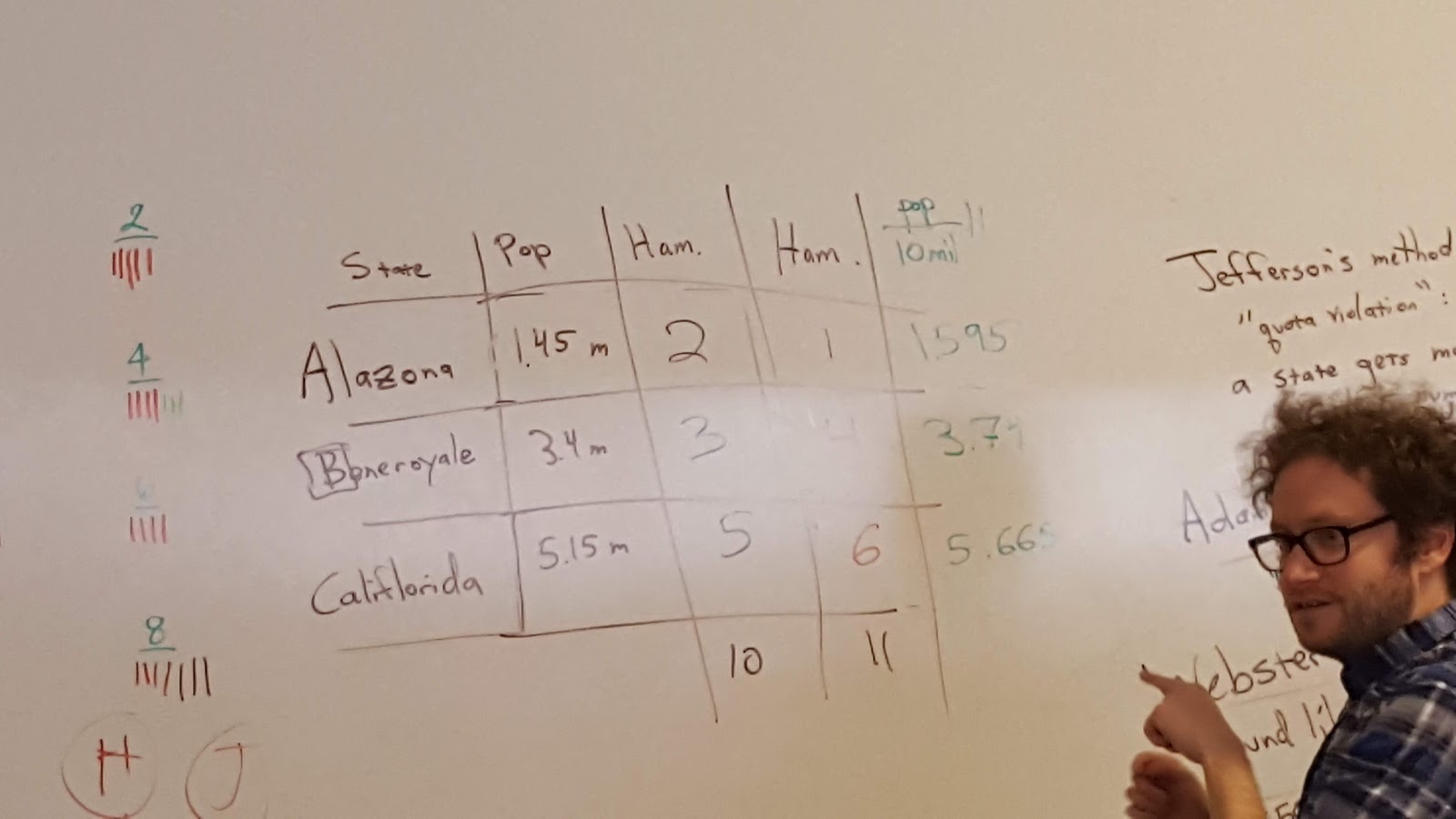
The initial setup: Alazona, Beneroyale and Califlorida. How should 10 delegates be apportioned? We had 3 serious contender ideas from the floor.
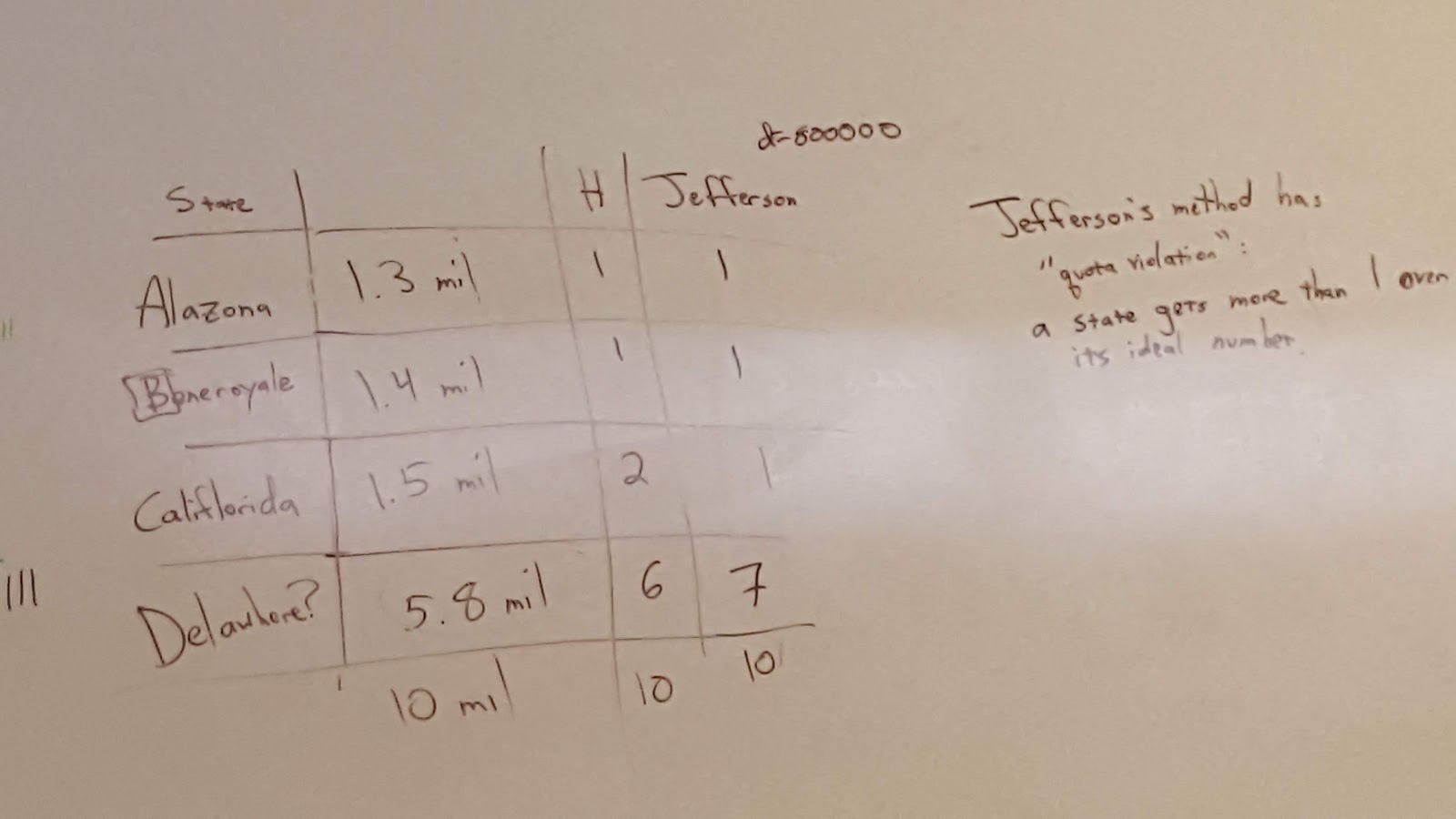
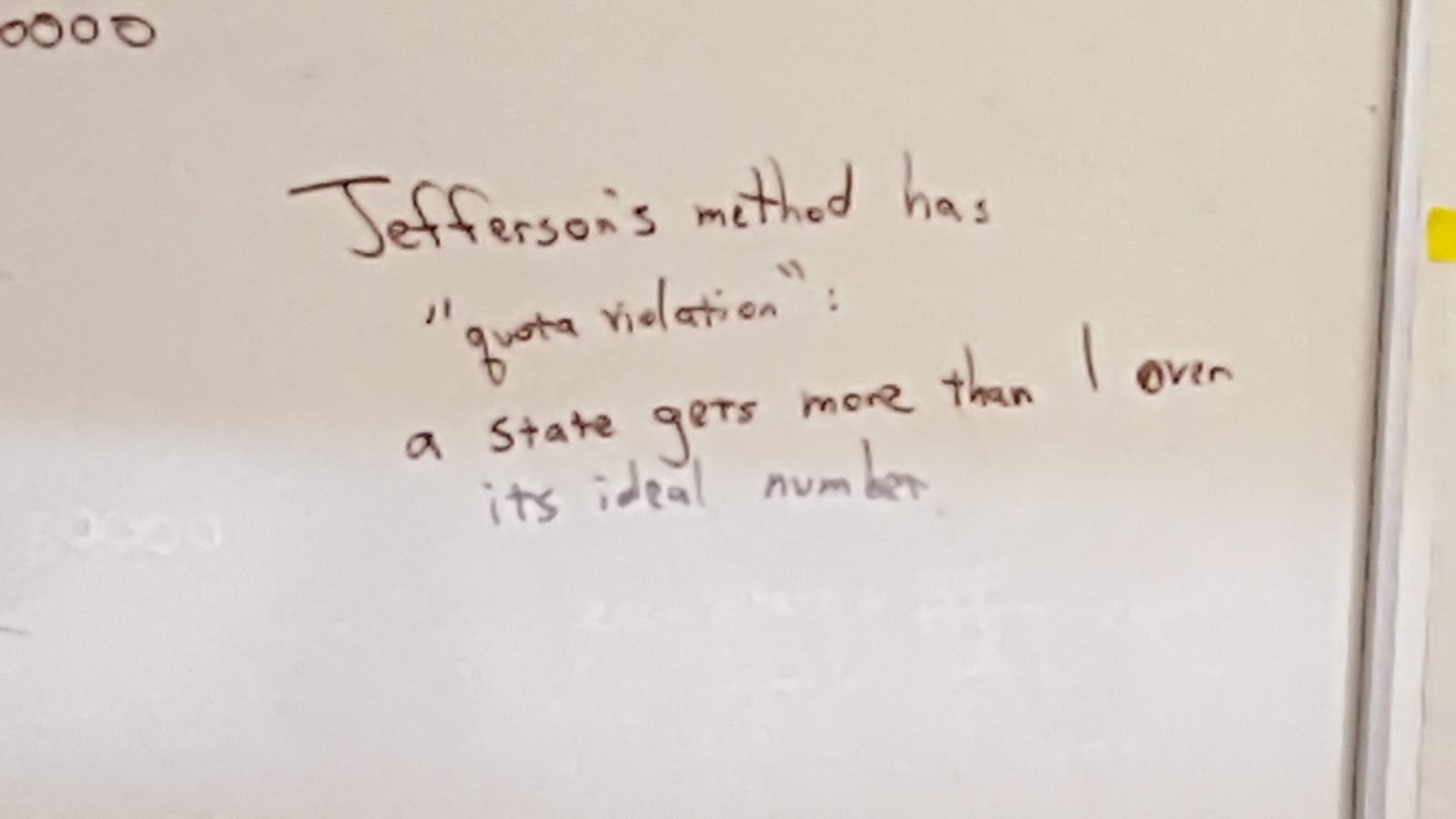
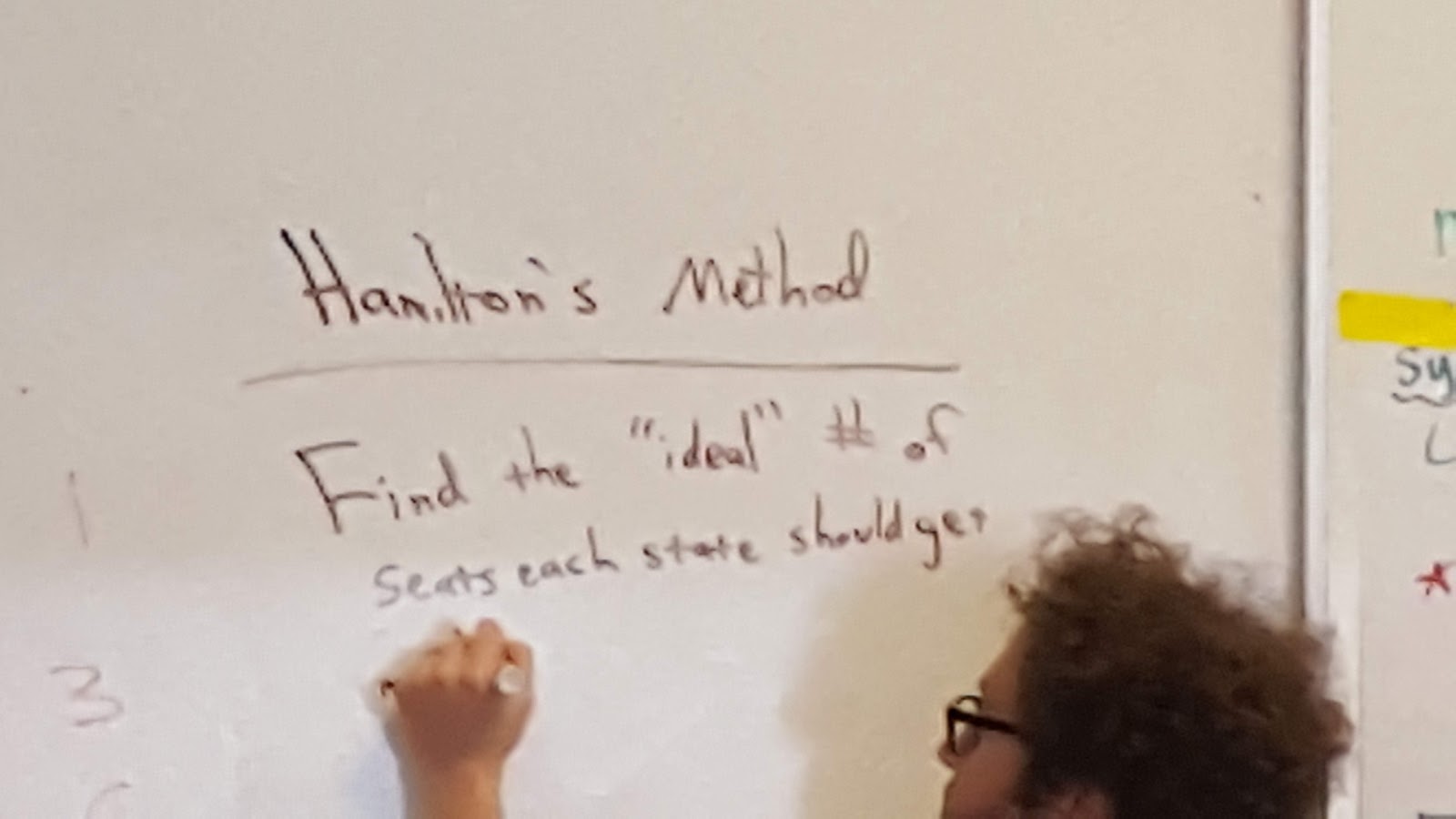
Hamilton vs. Jefferson. Should we round down up or down and do we start with percentages or use target district sizes? Who is advantaged under either system and what weird quirks fall out. Jonah brought some sample population sizes to work out that illustrated the various paradoxes.
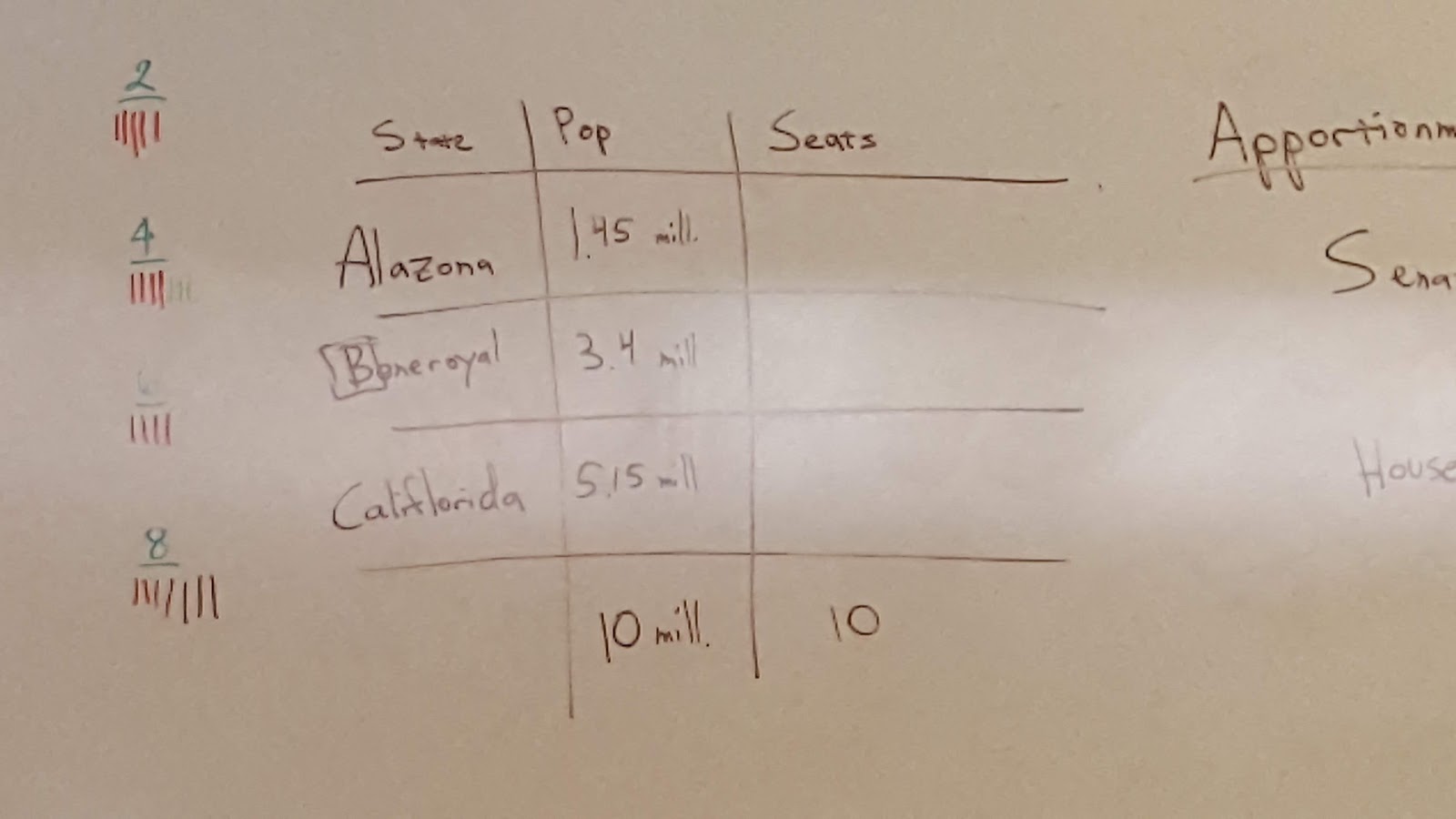
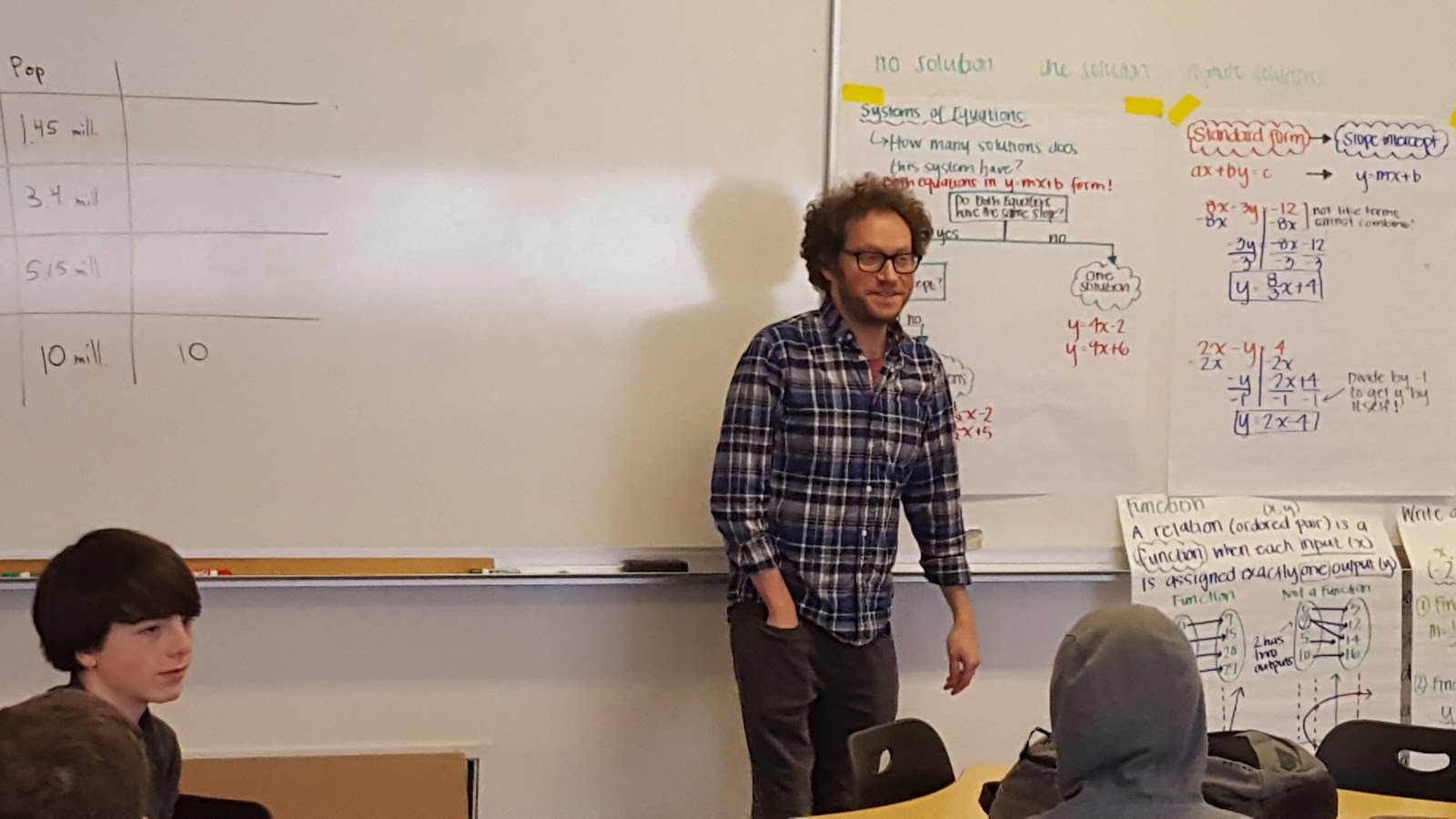
We worked our way through the Webster regular rounding system, geometric rounding and the problems in all the system.
-
Alabama Paradox: When two states have populations increasing at different rates, a small state with rapid growth can lose a legislative seat to a big state with slower growth.
-
Oklahoma Paradox: even if the number of members in the House of Representatives is increased by the number of Representatives in the new state, a pre-existing state could lose a seat because of how the particular apportionment rules deal with rounding method.
Side Note: I was surprised how many kids knew about the geometric mean via geometry. I wasn’t sure it was really covered there. This has me thinking about whether to talk about the AM-GM inequality in the future, a topic that I thought was probably out of reach in the past.
You can either have quota violations or other paradox: See: Balinski Young Theorem
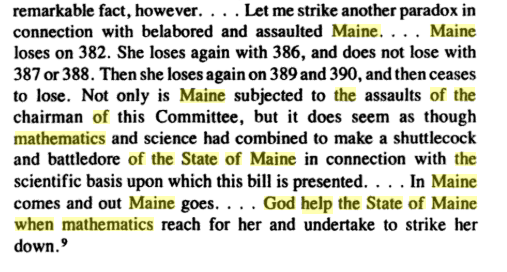
My favorite quote from the talk: Rep Littlefield of Maine 1901.
!
Leave a comment