Carnival of Maths 255
Intro
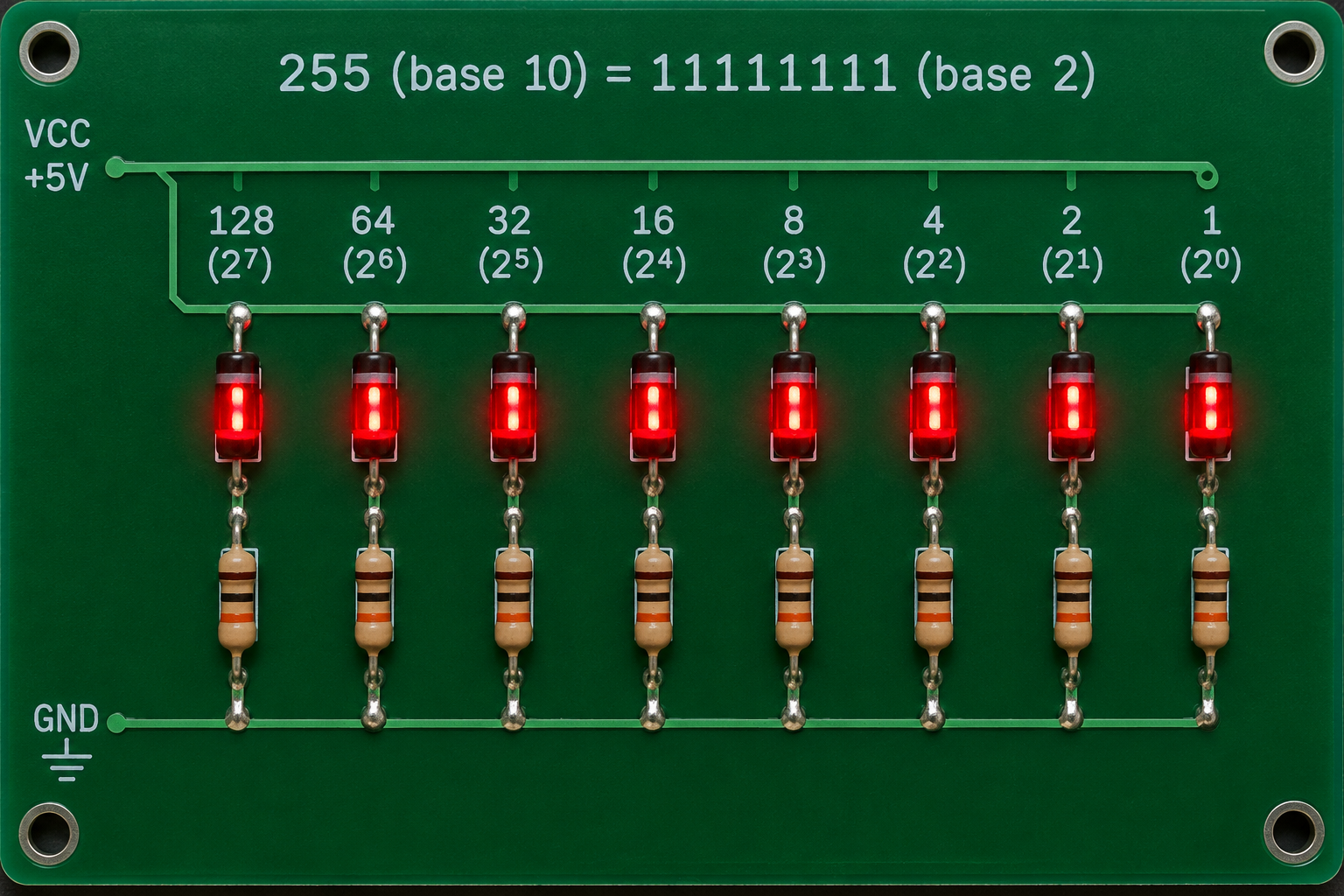
Welcome to the 255th Carnival of Mathematics For all the other carnivals future and past, visit The Aperiodical where you can also submit future posts. . I’m really excited to be hosting again after a several year gap on my newly re-platformed blog. As is traditional, let’s start with a few facts about 255 courtesy of the Wikipedia.
- Its factorization makes it a sphenic number .
- Since \(255 = 2^8 – 1\), it is a Mersenne number (though not a pernicious one), and the fifth such number not to be a prime number.
- It is a perfect totient number, the smallest such number to be neither a power of three nor thrice a prime.
- Since 255 is the product of the first three Fermat primes, the regular 255-gon is constructible.
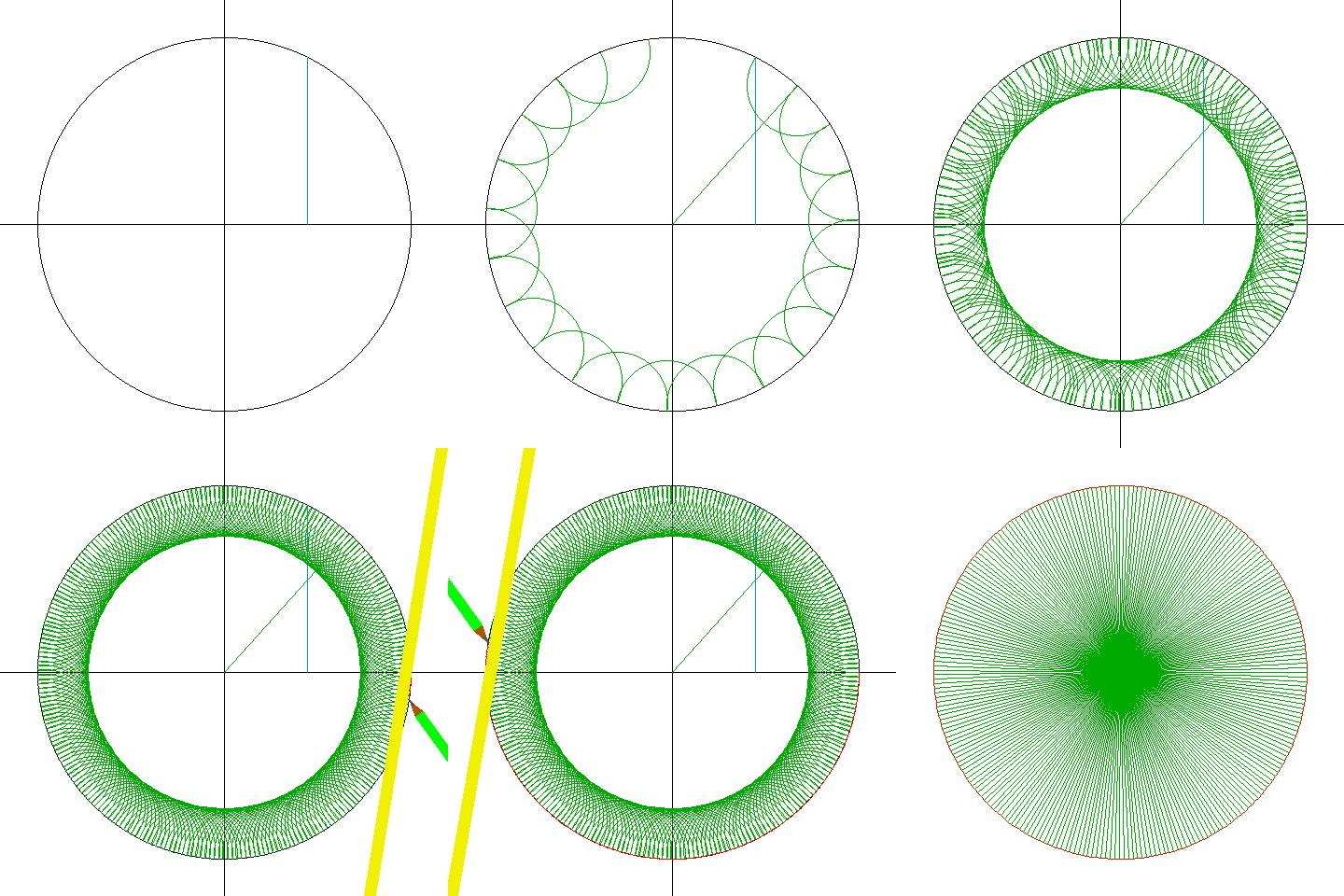
diacosiapentacontapentagon
Personally 255 resonates with me because its 0xff in hexadecimal a fairly common occurrence in coding often use as a bit mask. And long ago when I was in middle school I actually built my own digital adder out of circuits that was capable of adding up to it. (Although next month’s lucky carnival editor will have 256 which is even more evocative in computing.)
Submissions
There were a huge number of submissions this month and while a bit daunting is was a lot of fun working through all of them.
Games
-
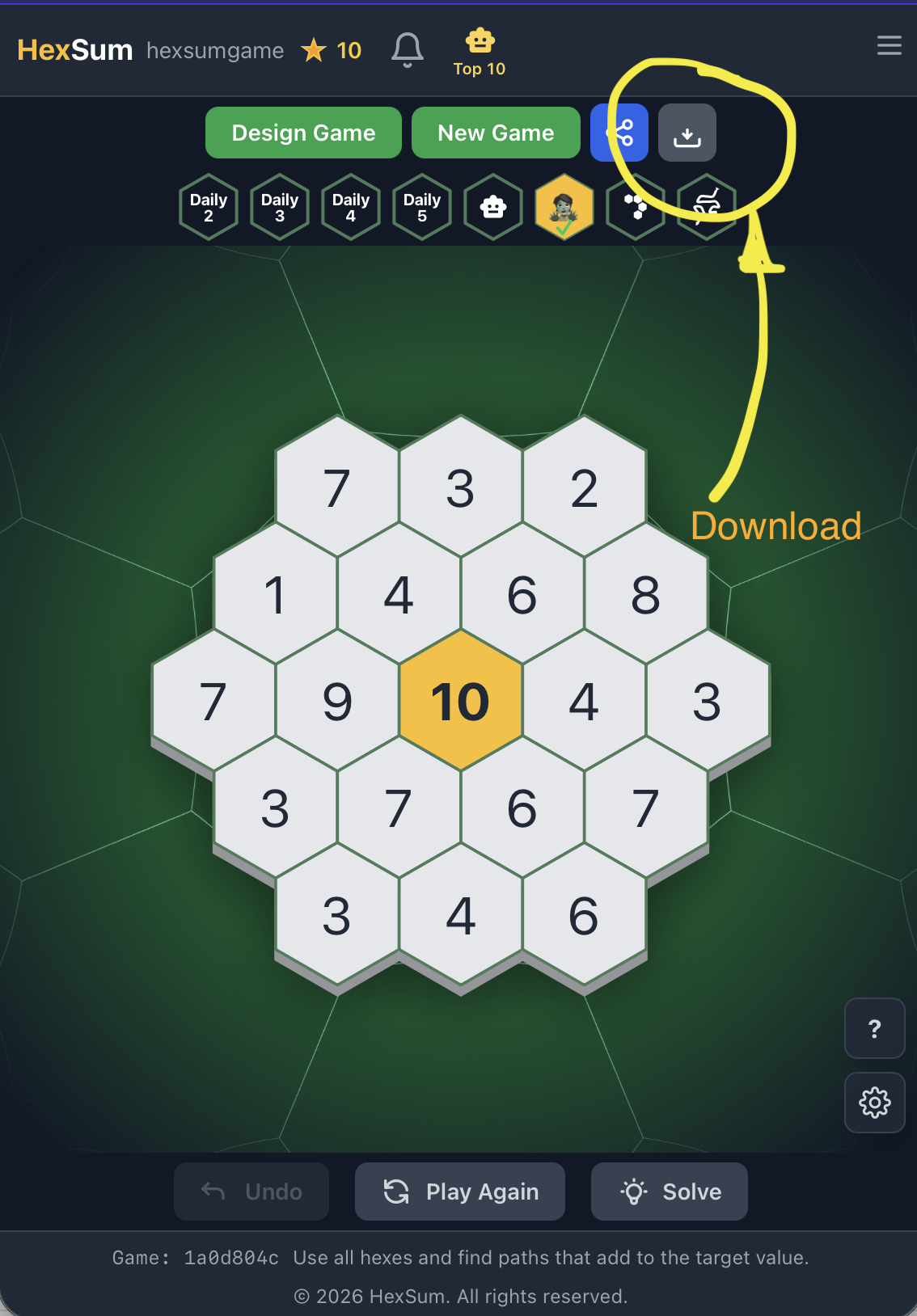
First up is this fun looking arithmetic based puzzle from mathmisery. I gave it a whirl and I agree this has a lot of potential as a warm up in classroom settings or just for your own personal enjoyment.
-
Next this game describes an algorithm for shuffling cards fairly. It’s used in statistics, cryptography and computer games. It has to be implemented carefully because a common mistake produces a shuffle that’s catastrophically biased. It’s worth studying how bad the biased shuffle is, and some mathematical results about it are unexpected. For example, once we have at least 18 cards, the most likely permutation is the identity, where none of the cards change position.
Probability and Combinatorics
-
Skewray has some updates to his probability notes including a section on convolutions and group symmetries over probability spaces. This feel useful if you’re taking a class in this space or boning up on the subject.
-
A birthday celebration for Micha Perles is an opportunity to survey everything combinatorial geometry
-
John Carlos Baez writes another fun blog post on coincidences among the binomial coefficients.
Number Theory
Video A short video on why a composite number has only one prime factorisation. Rather than drawing two factor trees and noting that the tips agree, it builds every factor tree of 32760 - 15,015 of them, from 47 ways of splitting at the top - and shows that all 15,015 end in the same eight primes. Then it ties off the two loose threads that make the theorem true rather than merely plausible: the 3,360 orders those primes can be written in, and why exactly one of them is the convention.
AI and Mathematics
-
An update via Gil Kalai on another breakthrough from LLM models. This time around percolations: link
-
Proof and prompts ponders the consequences of AI and the field here
The effects of AI are vast, and there is much to be said about its broader impact on society. One should also remind that mathematicians have a role to play in advancing research on AI safety. I do not feel sufficiently qualified to address these wider questions here, so I will instead focus on the direct effects that the current use of AI is having on the mathematical community and provide my experience as a practicing mathematician.
- Although this Announcement is hosted on Terence Tao’s blog, Tao is not on this Advisory Group. Gowers, who refused to sign the Fields medal-winners’ letter A Severe Misalignment of AI in Mathematics, is on the Advisory Group. Are we seeing two camps forming: Join forces with OpenAI vs Teach OpenAI to behave?
Cryptography
-
This recent podcast episode (published on September 10, 2026) explores the mathematics behind modern cryptology, including prime factorisation, cryptographic constructions, cryptanalysis, and the mathematical impact of quantum computers. It offers an accessible discussion of an engineers perspective with a mathematician and cryptologist about why certain mathematical problems underpin cryptographic security and how new mathematics is needed for post-quantum cryptography. As a recently published non-blog format, it provides an engaging way to connect mathematical theory with a major real-world application.
-
This post by Joseph Crail uses graph theory to deterministically find specific collisions of a hash algorithm while using number theory to drastically reduce the search space. The solution avoids a prohibitively expensive exhaustive search or the necessity of high-end hardware.
Art
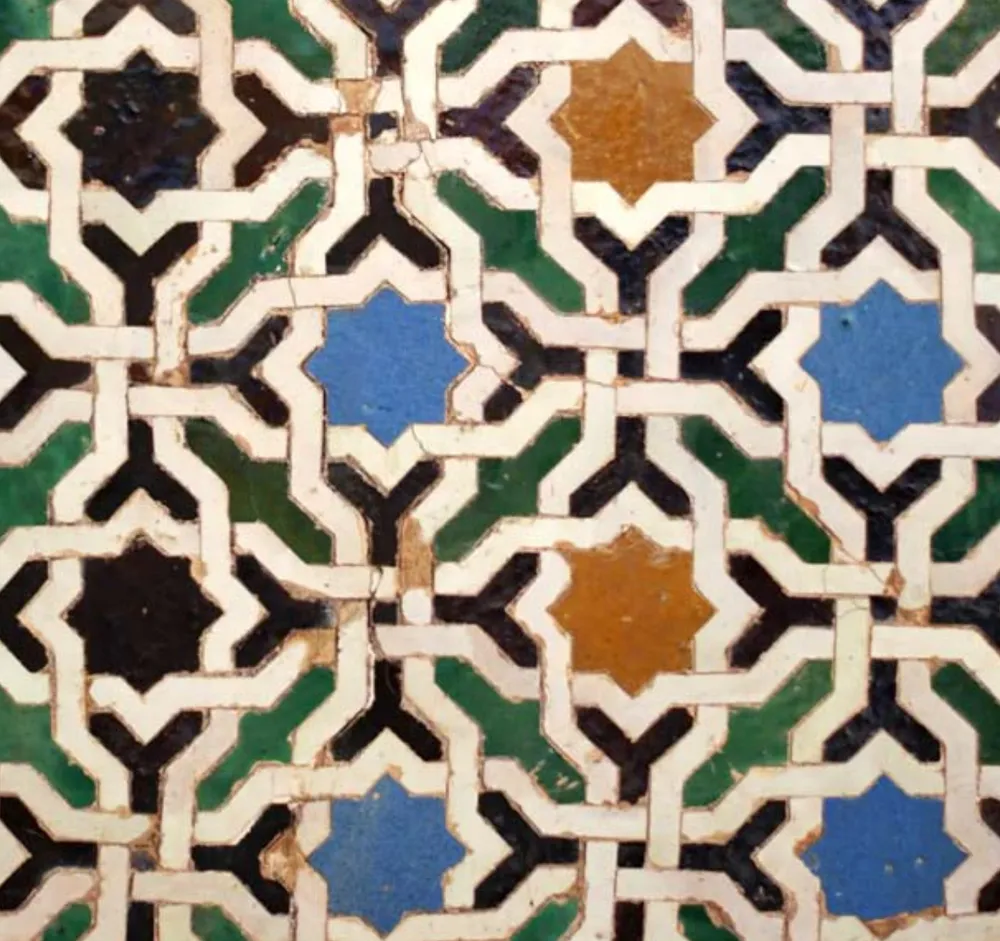
- Some lovely looking tesselations from Matt Zucker’s upcoming class. Post
-
Matt Henderson shared some cool animations with sand and physics that create an ellipse and a parabola. Great visual!
-
Theorem of the Day features on The Art of Mathematics podcast. Carol Jacoby expertly hosts many wonderful speakers and deserves a big hurrah.
-
Fractal Kitty has another set of beautiful visualizations out on her site.
-
The September proof without words playlist is out.
Abstract Algebra
This is a geometric proof from Lejdar Lukas of why normed division algebras exist only in dimensions 1,2,4 and 8. The idea behind it is that left or right multiplication by any unit vector u orthogonal to 1, should be represented by a linear map U that is both orthogonal and skew-symmetric. U^TU = I, U = -U^T => U^2 = -I. From there, it constructs multiplication tables explicitly, finding R, C, H and O. In dimensions > 8 it runs into a contradiction, which proves the theore
Measure Theory
Skewray has another light hearted post on the subject of measure theory.. Along with a bit of inappropriate humor, he careens off of continuity, equivalence classes, orderings, lattices and semilattices, order topologies, and metrics. Oh, and the subject is change of variable.
Geometry
-
John Golden shares some cool parallels and transversals in amazing home DIY video. I would love to take screen shots and ask geometry students to justify why the woodworking cuts “work”.
-
This post on Mastodon from David Renshaw talks about how a polyhedron is “Rupert” if it “fits through itself”. The Noperthedron was the first polyhedron proven to be non-Rupert. But what’s the simplest one? David released a video showing that this polyhedron actually does have a Rupert passage, albeit with a very tiny margin
-
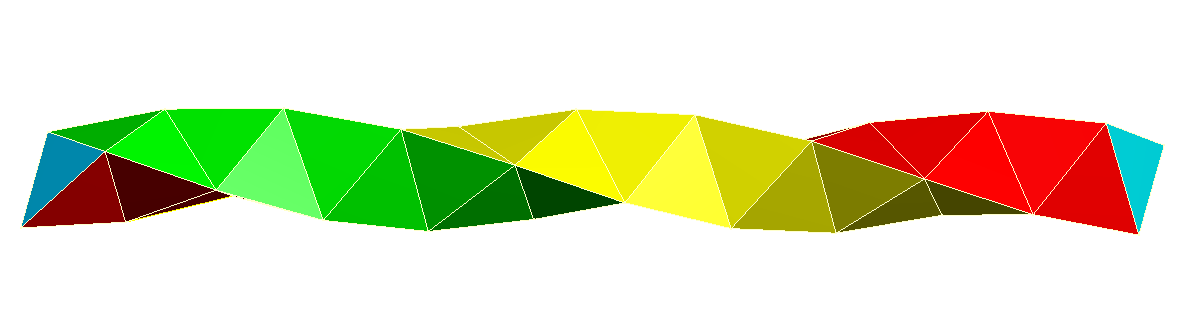
A second interesting math tidbit from John Carlos Baez. Coxeter and Boerdijk noticed that you can stick regular tetrahedra together to make a helix. It never repeats: no two tetrahedra have the same orientation in space!
Math History
-
The Renaissance Mathematicus blog has an interesting piece on how the method of exhaustion was developed totally independently in China and used in very much the same way as in Greek mathematics
-
From John Cook: “A couple days ago a friend told me about the book Carry On, Mr. Bowditch, a fictional account of the life of Nathaniel Bowditch (1773–1838). I’ve been listening to the book on Audible, and apparently it’s only lightly fictionalized.” Link
-
The mastowalll created for Riemann’s 200th birthday by @tetrartys@mastoart.social
Epilogue
Thanks for reading this month. In a fraught moment in human history it has been a welcome distraction compiling all of this cool mathematics.
Leave a comment